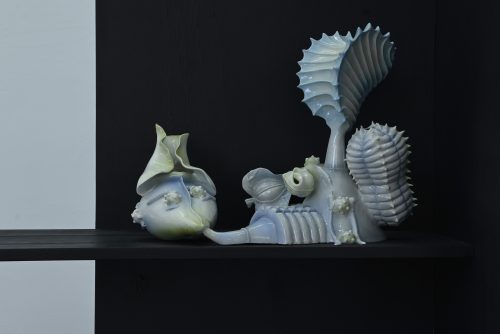
Katiciya
La cristallizzazione

Advertisement


“Moviti sul posto, vedere attraverso il cristallo”

“Moviti sul posto, vedere attraverso il cristallo”

“Moviti sul posto, vedere attraverso il cristallo”

“Moviti sul posto, vedere attraverso il cristallo”


“Il cerchio rotto”

“Uno, due, tre, quatre, cinque, Il coniglietto è uscito a fare una passeggiata”

“Uno, due, tre, quatre, cinque, Il coniglietto è uscito a fare una passeggiata”

“Uno, due, tre, quatre, cinque, Il coniglietto è uscito a fare una passeggiata”

“Uno, due, tre, quatre, cinque, Il coniglietto è uscito a fare una passeggiata”


“L’interruttore inaccessibile”

“L’interruttore inaccessibile”

“Il riflesso”

“Il riflesso”

“Il riflesso”

“La trappola per coniglio”

“La trappola per coniglio”
Crystallization is a phase transition of a substance from liquid to solid. From a physical standpoint, this is a transformation that implies a decrease in entropy.
Considering state regulation of the internet space as a process of crystallization—a transition from entropy to rigid structure—one can observe an accelerated slowdown. The works in the exhibition capture precisely this liminal state of frozen suspense, where acuity is masked by safety and visual appeal. The works construct a world in the genre of soft horror, centered on crystals.
These crystals represent the ideal form—a pure symbol of luxury and desire.
Encountering this ideal form, arriving as if from a cartoon, we fall under its influence; the crystal captivates us, thereby demonstrating its agency.
It captures our perception of reality in the moment of desire—becoming the "gaze" (le regard) in Lacan's terms. No longer are we looking at the crystal; it is looking at us.
The dilemma "will the image catch me, or will I catch it?"—posed by the artist through the invitation to look through the crystals—reflects a paradigm shift: from the world as a picture to the world as an optical effect in which we are immersed.
Classical observation assumes a distance between subject and object, while "crystalline" optics erases that distance.
Observing the external world through a crystal explores not what we see, but how the matter of the media itself predetermines the conditions of visibility. The prism of perception becomes a complex structure for capturing the viewer.
Matvey Kalmikov