Sasha Kupriyanov
The world’s most normal person
Project Info
- 💙 szena gallery
- 💚 Elmira Minkina
- 🖤 Sasha Kupriyanov
- 💜 Elmira Minkina
- 💛 Natalia Melikova
Share on

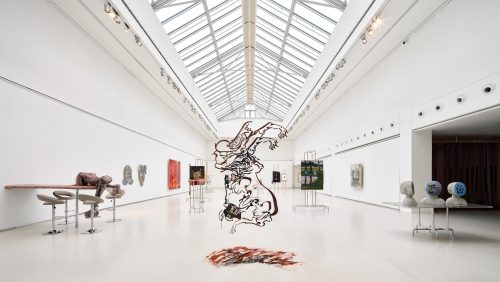
Exhibition view
Advertisement


Exhibition view

Exhibition view

Sasha Kupriyanov, “I forgive”, 2026, hemp fabric, photo transfer, 104 x 161 cm

Sasha Kupriyanov, “I forgive”, 2026, hemp fabric, photo transfer, 104 x 161 cm, details

Sasha Kupriyanov, “In the next order 1“, 2026, hemp fabric, photo transfer, 38 х 53 cm

Sasha Kupriyanov, “In the next order 1“, 2026, hemp fabric, photo transfer, 38 х 53 cm, details

Exhibition view

Exhibition view

Exhibition view

Sasha Kupriyanov, “When nobody’s watching”, 2026, hemp fabric, photo transfer, 53 x 103 cm

Exhibition view

Sasha Kupriyanov, “Follow the White rabbit“, 2026, hemp fabric, photo transfer, 84 х 69 cm

Exhibition view

Sasha Kupriyanov, “It girl”, 2026, hemp fabric, photo transfer, wood, 113 x 83 cm

Sasha Kupriyanov, “It girl”, 2026, hemp fabric, photo transfer, wood, 113 x 83 cm, details

Exhibition view

Exhibition view

Sasha Kupriyanov, “If I knew”, 2026, hemp fabric, photo transfer, 63 x 123 cm

Sasha Kupriyanov, “If I knew”, 2026, hemp fabric, photo transfer, 63 x 123 cm, details
“The world’s most normal person” — that could be the title of a biopic about a contemporary artist. Like any other normal person, artists are surrounded by content on social media, advertising on the streets and in the media, they watch movies and TV series, listen to music and, hopefully, read books and go to exhibitions of classical and contemporary art. Like any other normal person, artists integrate the results of someone else's creativity, whether anonymous or authorial, into their daily routine. These results revolve around us and their own axis, interrupting and replacing each other, complete and autonomous in form — artists use them, exploit them, and derive benefit from them. All of us, consuming culture, engage in micro-piracy to a zero degree; Sasha Kupriyanov delves into post-production.
Post-production is a term from film and video production, the stage of creating a film or video clip at which the final processing of the material takes place. Sasha's sources are stills from the film The Piano Teacher (2001), photographs of Kate Moss and Vincent Gallo, posts on Tumblr, and Diego Velázquez's Meninas. Working with the selected images involves transferring them onto fabric using the artist's own hand-printing technique — photo transfer — the inevitable color correction during the chemical process, and the assembly of individual fragments. The finished and framed canvas is given a title, and the post-production is complete.
The question of whether a work created on the basis of existing ones is truly complete, as well as the question of its nature and originality, lead us into the realm of theory and philosophy of contemporary art, while photo transfer as a type of post-production is a method of artistic practice. A photographer by training, Sasha has spent the last few years experimenting independently with different surfaces and printing methods. As a result of one of these experiments—on plant fiber fabric—he managed to achieve the blurred, grainy effect of analog photography, picturesque softness, and cinematic blue tones without mobile retouching. The refusal to use his own photographs in favor of screenshots and “saved images” can be explained by the global overproduction of images, the attitude towards them as an endless database, and the desire to continue this chain of ready-made works that fit together. Stitched together, they become a single whole, both technically and artistically, in Sasha's works.
The viewer and the artist, represented by Sasha, constantly switch places — quite expected from the most normal person in the world.
Elmira Minkina